
What Gary’s built on
Gary is a friendly voice on the phone, but underneath he’s a careful chain of proven tools. Here’s the shape of how it fits together — enough to see how Gary works, without the parts that make Gary, Gary.
The shape of a chase
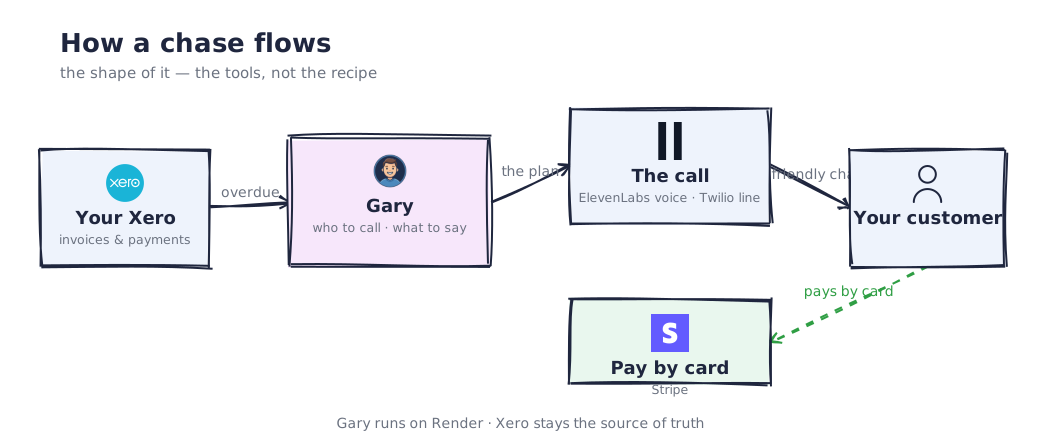
- Xero tells Gary which invoices are overdue and who to contact. It stays the source of truth: when a payment lands, Gary knows.
- Gary’s reasoning decides what to say and when — who to call today, how to open, when to offer to help, and when to stop.
- A real voice turns that into a warm, natural conversation, not a robotic script.
- A phone call reaches the customer on a normal number, in business hours.
- A result comes back to you: a promise to pay, a card payment taken on the call, a booked time, or the right person to ring next.
The pieces
 Xero — your accounting system, and Gary's single source of truth for invoices and payments.
 Language models — the reasoning that plans each chase and holds a conversation. Gary reaches leading models through OpenRouter, chosen for the job.
 ElevenLabs — the natural voice, so a call sounds like a person, not a phone tree.
 Twilio — the phone line itself, with numbers that work for calling New Zealand.
 Stripe — card payments, so a customer can pay by phone there and then.
 Render — where Gary runs, so the service stays up and your data stays in one place.
What makes Gary more than the sum of the parts
The tools above are off-the-shelf. The hard part isn’t. Knowing who to call and who to leave alone, how to stay polite under pressure, how to follow the rules on every call, and how to keep it all in step with your books — that’s the work we do, and the part we keep to ourselves.
Built for New Zealand rules
Debt-collection calls are regulated here, so the rules are built in, not bolted on:
- Gary says the call is recorded, in his opening line.
- He only calls within business hours, and never more than once a day per customer.
- If a customer asks not to be called again, he stops and remembers.
- Every call and action is written to an audit log, so there’s always a clear trail.
Your data
Gary holds only what he needs to chase your invoices, and never shares one business’s data with another. See Privacy and your data for what we store and for how long.
Learn more
- How Gary works, the short version of a chase.
- Gary and Xero, what the connection reads, writes and never touches.
- What happens after a call, what each result means.
- Privacy and your data, what we store and for how long.